


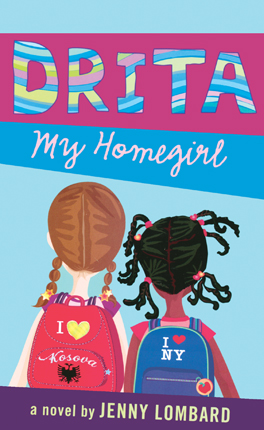
  | Full Text Reviews: School Library Journal - 03/01/2006 Gr 3-5-In alternating chapters, two fourth graders tell about the development of their unlikely friendship. Drita is a refugee from Kosova who, along with her family, is finally joining her father in New York City. In a cramped apartment and without connections or language skills, her mother sinks into a serious depression, while the girl struggles to find her place in school. Maxie, a precocious African-American child who lives with her supportive grandmother and her widowed father, struggles, too; she's in constant trouble in school for her comedic efforts since her mother died. When she sees a news report on Kosova, she decides to do a project on Albanian refugees, focusing on Drita. The girls find common ground, and when Maxie's grandmother, a retired nurse, sweeps in to rescue Drita's mother, the families forge a bond as well. Maxie's attempts to help Drita understand American ways are touching, and Drita's understanding of her friend's loss is a testament to the emotional intelligence of children. Drita's story resonates with the bravery of an individual determined to become part of her new country while retaining the love of her homeland. Maxie has the cocky voice of a girl who is trying too hard to disguise her pain. More a tale of the power of love than of refugees, this first novel is imbued with the language and customs of Kosova as well as the efforts of a family attempting to regain balance. Read it aloud to groups and let the conversations begin.-Susan Oliver, Tampa-Hillsborough Public Library System, FL Copyright 2006 Reed Business Information. - Copyright 2006 Publishers Weekly, Library Journal and/or School Library Journal used with permission. Booklist - 05/01/2006 Drita, 10, is a Muslim Albanian refugee from Kosovo and a stranger in her fourth-grade classroom in Brooklyn, New York. Maxie is African American, one of the in-crowd that wants nothing to do with the newcomer—until her social studies teacher charges her with interviewing Drita about her story. The two girls speak in alternating first-person narratives that reveal both their differences and their connections: Drita’s mother is having a breakdown; Maxie cannot confront her grief about her mother’s death in a car accident three years before. Most moving is Drita’s surprise about the ethnic mix in her classroom; in Albania a wall separates Serb students from Muslims. The message connecting schoolyard bullying with war is heavy, but the girls’ growing friendship and respect for one another is poignant, as is the climax when Maxie presents her report about what Drita left behind. Steer slightly older children wanting more about the Balkan war to Nadja Halilbegovich’s My Childhood under Fire: A Sarejevo Diary (2006). - Copyright 2006 Booklist. Loading...
 |