

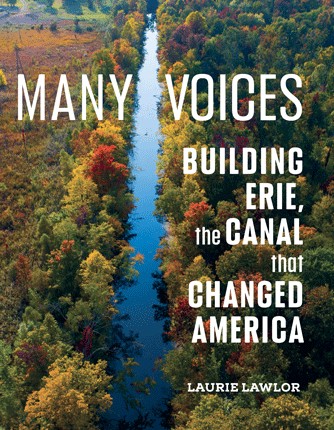
   | Many voices : building Erie, the canal that changed America Author: Lawlor, Laurie | |
| Price: $23.98 | ||
Summary:
"The Nation's First Superhighway" existed before the spread of cars or even railroads! This photo book ferries readers through the past and present of the Erie Canal, from impossible idea to groundbreaking reality.
Reviews:
School Library Journal (+) (07/01/25)
Booklist (02/01/26)
Full Text Reviews:
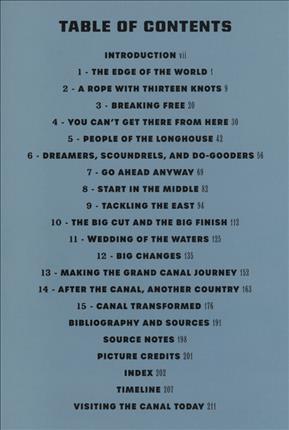
School Library Journal - 07/01/2025 Gr 5 Up—A social history for young people that seeks to explain the complex interplay of political, technological, cultural, and economic forces that culminated in the creation of the Erie Canal. The canal connecting the Atlantic Ocean with the Great Lakes opened in 1825 after almost a decade of construction and a cost of $7,000,000 ($185 million in today's terms). Lawlor situates the canal in the geopolitical and social factors that contributed to its development, reveals the extraordinary costs in human, natural, and technological resources that made the 363 mile–long waterway a reality, and illustrates the far-ranging repercussions that the canal has had on individual lives and on American society over the last 200 years. Her narrative stays true to the goal encapsulated in the title, that of centering the voices of the many Indigenous, enslaved, and immigrant peoples who experienced profound loss and change from this marvel of engineering and economic progress. The final chapters give some consideration to the ecological implications of the canal and the industrialization that sprang up in the wake of its creation. An extensive bibliography for further reading rounds out the narrative, as well as source notes, a glossary, a time line, and an index. VERDICT This story of one of the most pivotal engineering accomplishments in U.S. history, told from diverse perspectives, is highly recommended for middle and high school collections.—Kelly Kingrey-Edwards - Copyright 2025 Publishers Weekly, Library Journal and/or School Library Journal used with permission.
Booklist - 02/01/2025 This account of the 1825 Erie Canal first sets up historic and geographic context, but not through a traditional Manifest Destiny lens. Instead of lauding western submission of the wilderness, the text acknowledges the Indigenous peoples that populated the lands stretching east to Lake Ontario and the land grabs that broke treaties, resulting in widespread Native American deaths, displacements, and enslavement. Once construction started, thousands of enslaved individuals from Africa worked alongside impoverished immigrants to hack the 40-foot-wide, 7-foot-deep canal using shovels, axes, and notoriously unreliable gunpowder. Political wrangling persisted, but once completed, the canal was a marvel that energized the new country. Like the internet, the canal sparked tremendous connectivity, communication, and economic growth. Essentially abandoned once outdated, local concerns, occasionally headed by Indigenous groups, have worked to resurrect portions of the canal and restore ecological balance. Maps, illustrations, and numerous contemporary eyewitness accounts support the text, and report writers will appreciate the robust bibliography. This is an accessible account of a crucial, but often overlooked, phenomenon of American history. - Copyright 2025 Booklist.
