

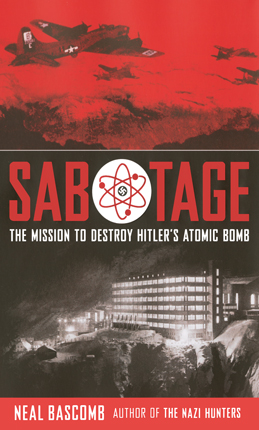
  | Full Text Reviews: School Library Journal - 05/01/2016 Gr 8 Up—The people of Norway had hoped to remain neutral during World War II as they had in the Great War, but that hope was shattered when Nazi Germany invaded Norway's ports in the early days of April 1940. In addition to taking over Norway's land and exiling their king, Germany also intended to capture the hydroelectric plant at Vemork in Norway's frozen highlands. The plant was one of the only places in the world that produced a substance called heavy water, an extremely important ingredient in Germany's race to develop an atomic bomb. It would take the Allies several unsuccessful attempts before a time bomb planted on the ferry transporting the heavy water and production equipment across a deep lake spelled the demise of Germany's atomic research. Bascomb is a master of taking complicated histories and turning them into exciting works of nonfiction. By exploring the various backgrounds of each of the Norwegian resistance fighters and scientists, he gives readers a chance to understand their motivations and properly empathize with their struggles. This investment pays off as the stakes get higher, and the narrative deftly switches between their perspectives, creating a dramatic and suspenseful tension like no other. A generous amount of captioned black-and-white photos of the men, buildings, and artifacts help to guide readers through the text. - Copyright 2016 Publishers Weekly, Library Journal and/or School Library Journal used with permission. Booklist - 05/01/2016 The author of Nazi Hunters (2013) tackles another part of WWII in this crackerjack young reader’s adaptation of his latest nonfiction work for adults, The Winter Fortress (2016). In 1940 in the midst of Germany’s race to invent an atomic reactor, German physicists discovered the importance of heavy water, an isotope produced only at Vemork, a hydroelectric plant in newly Nazi-occupied Norway. As the Allies sought to halt Nazi atomic research, they turned their attention to Vemork, sending small teams of resistance fighters to sabotage the plant’s operations. Relating the story in suspenseful prose with only occasional departures into stats and figures, Bascomb tells of the heroic teams of Norwegian and British resistance fighters who braved a harsh Scandinavian winter and harrowing bouts of hunger while lying in wait to carry out their plans. While the descriptions of the science behind heavy water might befuddle some readers, Bascomb’s clear-eyed account of the thrilling mission and its many challenges, cast against the backdrop of WWII—and helped along by photos, maps, and diagrams—will handily engage teens. - Copyright 2016 Booklist. Bulletin for the Center... - 06/01/2016 When the right atoms under the right circumstances collide and split, enormous energy is released. The implications of this discovery had barely been addressed before it was coopted by the Axis and Allied governments in World War II, and the race was on for the development of an atomic bomb that would turn the tide of war for its deployer. A key element for controlling the chain reaction was the moderator heavy water, which had been produced in small amounts at a plant in Vemork, Norway. Already a target for its location on the North Sea, Norway was swiftly occupied by German Nazis and the plant was recommissioned to produce heavy water. Here Bascomb relates the heroic efforts of Norwegian resistance fighters, under command of the British SOE, to sabotage the plant and delay German development of the bomb. The book shines a floodlight on this less recognized part of the war, focusing on the teams of infiltrators and the unforgiving conditions of the snowpacked, blizzard-prone Norwegian Vidda into which they skied or airdropped to prepare for their raids. War-story fans would be hard pressed to find a more innately thrilling episode, with the players in constant peril from capture and torture, or injury, freezing, and starvation. Even as readers cheer the victors, though, they are confronted with the collateral damage wrought on the innocent Norwegians who suffered punitive Nazi reprisals and imprecise Allied bombing. An index, source notes, and extensive bibliography are included, but as Bascomb notes, “the lion’s share of this story” was drawn from primary sources, which accounts for its vivid immediacy. Teens who followed Bascomb’s post-war The Nazi Hunters (BCCB 10/13) will be engrossed by this title as well. EB - Copyright 2016 The Board of Trustees of the University of Illinois. School Library Journal - 12/01/2016 Gr 8 Up—A small team of average Joes escape out of their native Norway, undergo espionage training in Britain, and parachute into their Nazi-occupied homeland. Their high-risk mission: to destroy a hydroelectric plant in the remote, wintry mountains that produces a vital component, heavy water, for constructing an atomic bomb. Chock-full of archival photos and maps, this absorbing account sheds light on a lesser-known and vital chapter of World War II history and serves as a memorable tribute to the skiing spies. - Copyright 2016 Publishers Weekly, Library Journal and/or School Library Journal used with permission. Loading...
 |