

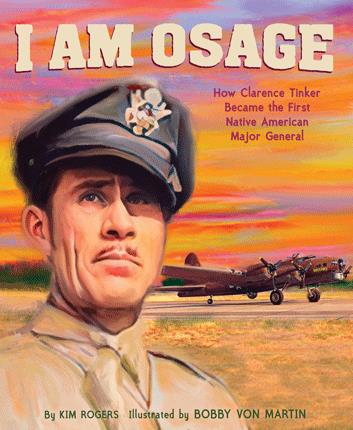
  | I am Osage : how Clarence Tinker became the first Native American Major General Author: Rogers, Kim | |
| Price: $24.48 | ||
Summary:
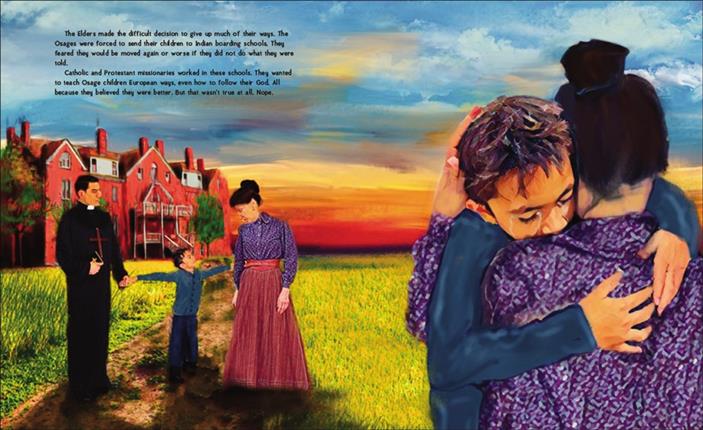
A biographical picture book about Clarence Tinker, a member of the Osage Nation, who endured abuse growing up at the hands of a boarding school and went on to serve in the United States Air Force in World War II.
| Illustrator: | Von Martin, Bobby |
Reviews:
Kirkus Reviews (12/15/23)
School Library Journal (+) (05/03/24)
Booklist (01/17/24)
Full Text Reviews:
School Library Journal - 05/03/2024 PreS-Gr 3—The incredible life story of Clarence Tinker, the first Native American Major General in the United States. Rogers explores Tinker's painful childhood in residential schools, his commitment to education despite obstacles, and his resilience in military roles. Starting off in military academy, Tinker moved through the ranks. His acts of bravery earned him respect in his unit, which made his overall arc one of the power of resilience, honor, and duty. Tinker's life unfolds and is not separate from the struggles of Indigenous people in North America, as colonial entities unlawfully or immorally controlled and restricted their freedom to pursue dreams. Von Martin's illustration glow with the radiance of oil paintings, drawing the eye to key moments in Tinker's life and highlighting aspects of Osage culture. VERDICT An excellent addition to nonfiction collections for young readers.—Meaghan Nichols - Copyright 2024 Publishers Weekly, Library Journal and/or School Library Journal used with permission.
Booklist - 01/17/2024 Still honored, the author writes, in an Osage Nation drum and dance ceremony every June as “one of their greatest warriors,” Tinker received an officer’s commission in 1908 and went on to become an army pilot and, in 1942, a major general, before being killed at the Battle of Midway. With the refrain, “I am Osage. I am Osage,” pounding like a drumbeat throughout her account, Rogers celebrates the way he held onto his Indigenous roots through Indian boarding school, military academy training, and afterward, before closing with a note explaining his importance to her as a role model on her personal journey toward acceptance of her Native American heritage. Appropriately, images of drummers recur in Von Martin’s grave, formal acrylics as he digitally assembles montages of photorealistic figures, usually clad either in military uniforms or vividly patterned blankets and ceremonial dress. A closing time line of Osage and Wichita history from 1820 on adds further detail and historical context to this proud remembrance. - Copyright 2024 Booklist.
